
Faith and Damnation
The Tale of the Vampire BrideThis flow follows the novel’s changing spiritual language as characters confront crosses, prayer, vampirism, and the possibility that love or sacrifice might still carry meaning.
increasing Bearing strength in each event
 decreasing
Bearing strength in each eventdecreasingA Mother’s Catholic Faith
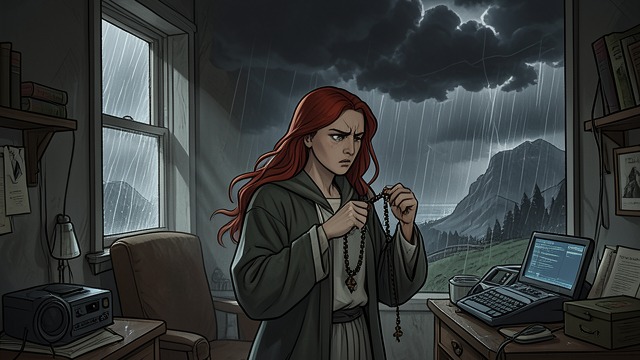
Prayer During Danger
Antoinetta’s Devotion
Antoinetta prays through the storm and clings to her rosary when the family’s route closes.
Edric’s Skepticism
The parents’ different responses distinguish spiritual trust from rational disbelief before both are tested by supernatural violence.
A Cross in the Dungeon
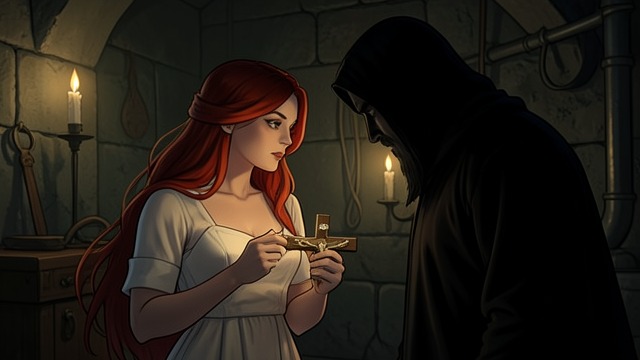
Faith as Protection
A Prisoner’s Defiance
Antoinetta holds up her cross against Vlad and invokes divine judgment.
Love and Danger
Her faith repels Vlad but also forces Glynis, newly changed, to confront the sacred object as a threat.
The Blood Sacrament
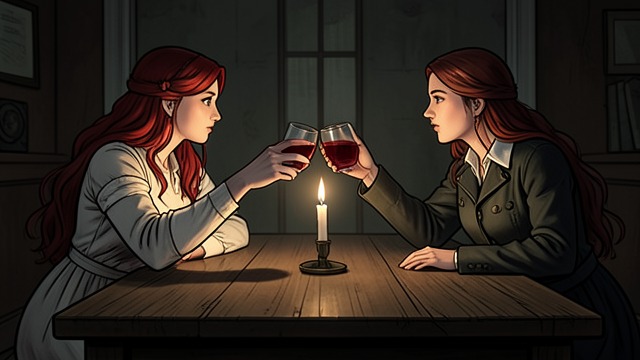
A Sacrifice Reinterpreted
A Mother’s Consent
Antoinetta asks Glynis to drink rather than leave her to Vlad’s torture or the coming madness.
A Sacred Meaning
Glynis later understands the killing as a final act of maternal giving, though it remains an act she must carry as guilt.
Ignatius’s Lost Church
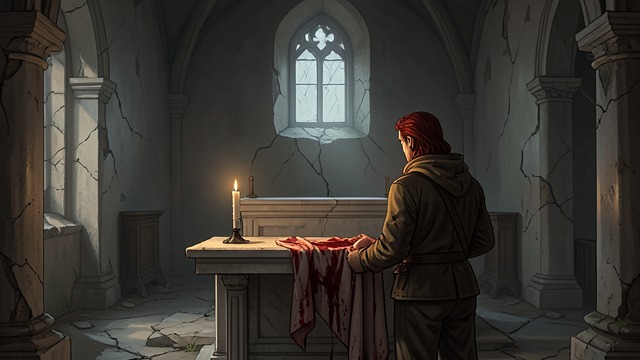
A Priest Beyond the Altar
Faith Broken by Turning
Ignatius explains that becoming a vampire separated him from his church and the divine presence he once felt.
Love as New Grace
His love for Glynis feels both like a renewed sin and the first joy that makes his dark life bearable.
No Simple Absolution

Moral Survival
A Victory With Cost
Glynis gains freedom by killing the man who transformed and controlled her, but she cannot undo the lives lost.
Spiritual Uncertainty
Her prayers and memories remain, even as her future is shaped by revenge, vampirism, and unresolved hope.
The journey to Dracula’s Castle
June 1819
The night Antoinetta dies
Ignatius’s confession in April 1820
After Glynis defeats Vlad
